
Routine Hygiene That Prevents Bigger Problems Later
Nail Trimming & Hygiene Services in Lufkin for dogs with overgrown nails, ear buildup, or owners maintaining a consistent hygiene schedule between full grooming appointments
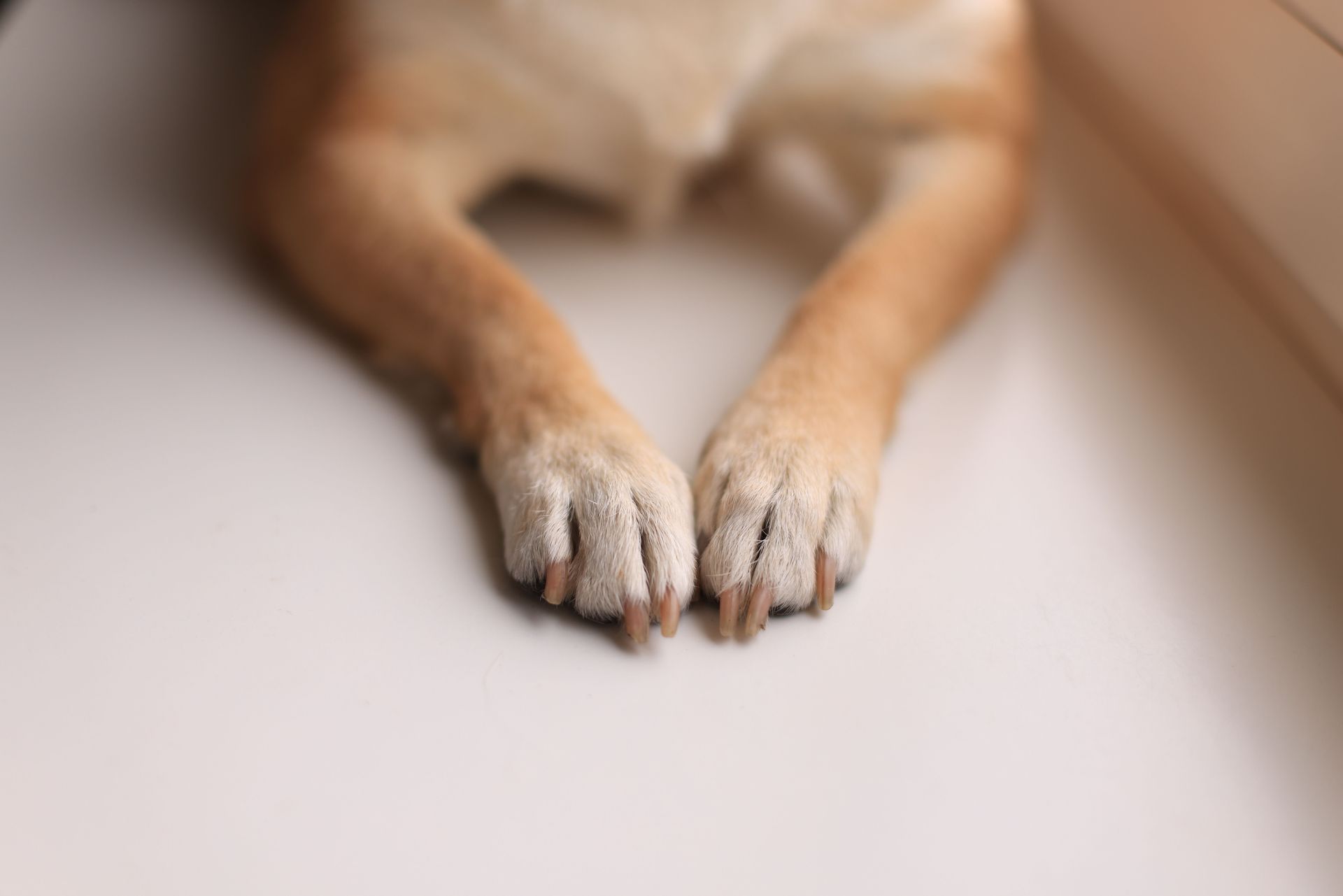
Nails that extend past the point of contact with the ground change how a dog distributes weight across its paws. Over time, that shift in weight bearing posture affects the joints in the foot and leg, a mechanical reality that makes regular nail maintenance a structural issue, not just a cosmetic one. Drop Tine Kennels provides nail trimming and hygiene services in Lufkin that address nails, ears, teeth, and paw condition as a connected maintenance system rather than isolated cosmetic tasks.
Nail trimming involves either clipping or grinding, and the right method depends on the individual dog. Grinding removes smaller amounts of nail per pass, which reduces the risk of cutting the quick, the blood vessel that runs through the nail, and produces a smoother edge that doesn't catch on fabric or flooring. Clipping is faster but requires more precise judgment of where the quick ends, particularly in dark pigmented nails where it's not visible from the outside. At Drop Tine Kennels, the method used is selected based on the nail's current length, the dog's comfort level, and the condition of the nail itself.
Schedule a hygiene appointment to address current nail length and discuss which maintenance interval keeps the nails at a functional length going forward.
What Nail and Hygiene Maintenance Actually Covers
Ear cleaning during a hygiene appointment removes the visible accumulation of wax and debris from the outer ear canal, the portion accessible without instruments. This step matters because that buildup creates the moist environment in which bacterial and yeast infections develop. Floppy eared breeds common in the Lufkin area are particularly prone to ear problems because the ear leather restricts airflow and traps humidity against the canal opening.
After a complete hygiene appointment at Drop Tine Kennels, owners notice that their dogs walk differently when nails have been brought back to a correct length, the gait normalizes because the foot is landing correctly again rather than compensating around overgrown nails. Ears that have been cleaned look different inside and, in dogs prone to shaking their heads, that behavior typically decreases when the irritant causing it has been removed.
Teeth brushing and anal gland expression, when included in a hygiene appointment, address maintenance needs that have real health implications when neglected, dental disease is the most commonly diagnosed chronic health problem in adult dogs, and anal gland impaction causes significant discomfort that owners often attribute to other causes. These services are part of a complete hygiene maintenance approach rather than optional extras.
Questions About Nail and Hygiene Services
Hygiene appointments prompt specific questions about safety, frequency, and what the service actually covers.
How often should a dog's nails be trimmed? Most dogs need nail trimming every four to six weeks, though dogs that walk frequently on hard pavement wear their nails down naturally and may need trimming less often than dogs that spend most time on soft surfaces.
What is the difference between nail clipping and nail grinding?
Clipping removes nail length in a single cut, while grinding removes smaller amounts progressively, grinding is generally better tolerated by dogs that have had negative experiences with clipping and produces a smoother finished edge.
How is ear cleaning done without causing discomfort?
Cleaning addresses the outer ear canal using appropriate solution and gentle technique, no instruments are inserted beyond the visible canal, and the process is stopped if the dog shows signs of pain that might indicate a deeper ear issue.
Why do dogs in Lufkin tend to have more frequent ear issues than dogs in drier climates?
Humidity and heat create the moisture conditions in the ear canal that support yeast and bacterial growth, dogs in East Texas, particularly floppy-eared breeds, benefit from more consistent ear cleaning intervals than dogs in arid regions.
When should nail trimming be done by a groomer rather than at home?
Dogs that resist handling, have very dark nails where the quick is hard to see, or have nails that have grown long enough to curl are better managed by someone with the tools and technique to complete the trim safely.
Drop Tine Kennels can confirm which hygiene services apply to your dog and set up a maintenance schedule that keeps the work manageable between appointments.