
Clean Coats Start With the Right Products and Process
Dog Bathing & Spa Services in Lufkin for dogs with odor issues, skin sensitivity, coat buildup, or owners who want a thorough clean that standard grooming rinses don't deliver
Product selection in dog bathing is not cosmetic, it directly affects skin pH, coat texture, and how long a dog stays clean between appointments. Drop Tine Kennels offers dog bathing and spa services in Lufkin using premium shampoos and conditioners matched to each dog's coat type and skin condition. Dogs with sensitive skin receive formulations that clean without stripping the skin barrier; dogs with dense or double coats receive products designed to penetrate the undercoat layer where odor and debris accumulate most.
Bathing a dog correctly involves more than running water over the coat. Thorough saturation of a dense coat, particularly on double coated breeds common in the region, takes time, and incomplete saturation means the shampoo never reaches the skin where bacteria and yeast growth originate. At Drop Tine Kennels, the bath process includes pre rinse brushing to loosen debris, full coat saturation, shampoo application with sufficient contact time, thorough rinsing to remove all product residue, and blow drying that removes moisture from the undercoat layer rather than leaving the skin surface damp under a dry looking outer coat.
Inquire about bathing appointment availability and specify any known skin sensitivities or current coat conditions so the right products can be prepared in advance.
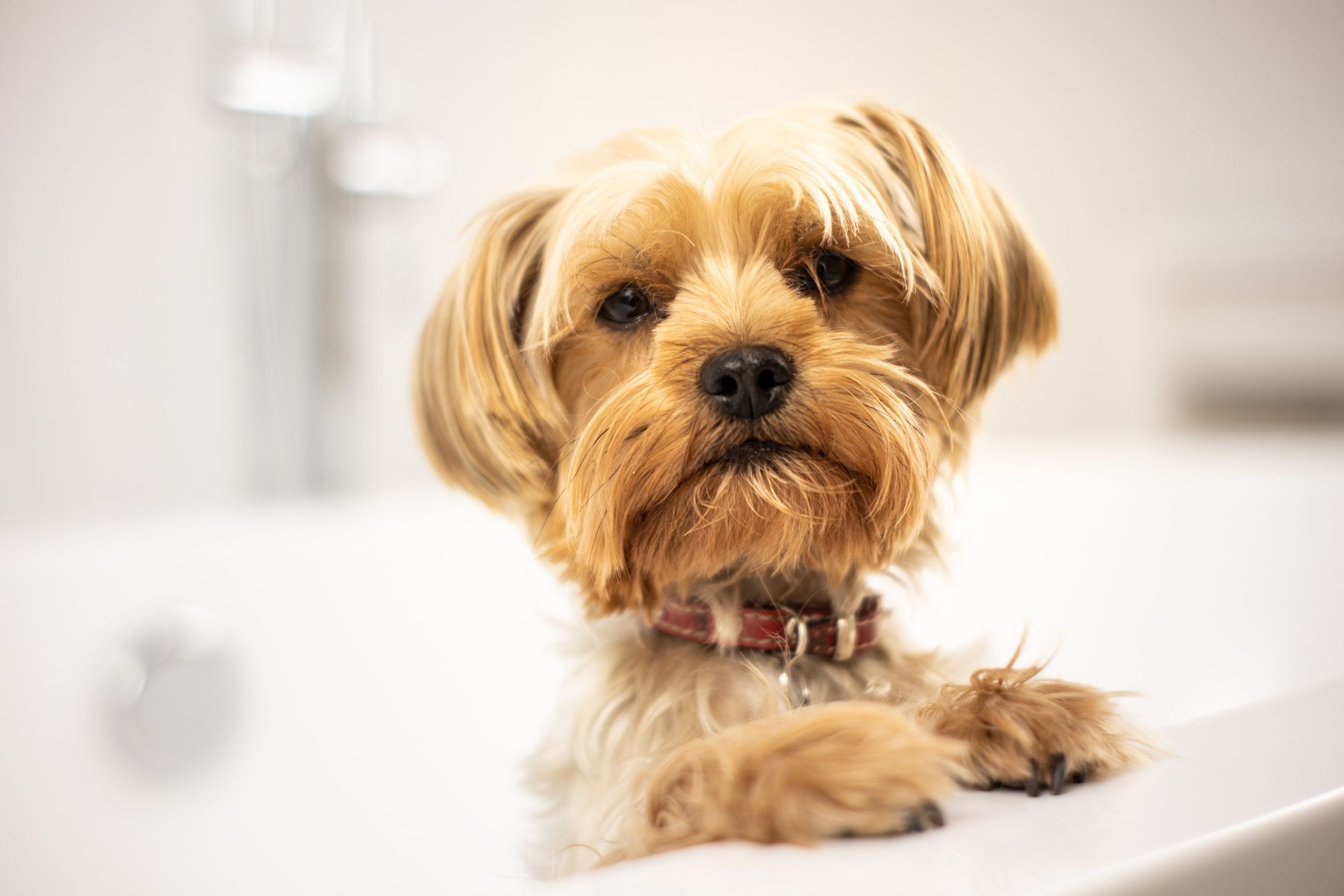
What Spa Level Bathing Involves
Odor control treatments address the source of the odor rather than masking it. Surface level fragrance applied over a coat that hasn't been thoroughly cleaned and dried will dissipate within days, the odor returns because the bacteria producing it were never removed. At Drop Tine Kennels, odor control is part of the bathing process itself: proper product selection, complete rinsing, and thorough drying prevent the moisture and bacterial conditions that generate odor in the first place.
After a thorough bathing and spa appointment, owners notice that the coat feels different, softer and less coarse, and that the dog's skin is less flaky or irritated than it appeared before the appointment. Coat conditioning treatments applied after the bath improve texture and reduce static and tangling, which makes the period between appointments easier to manage with at-home brushing.
Sensitive skin options are available for dogs that have reacted to standard grooming products in the past, owners should provide that history at booking so the appointment can be planned around appropriate formulations. Dogs in the middle of an active skin issue should be seen by a veterinarian before a grooming appointment, as bathing can aggravate inflamed or broken skin.
What Owners Ask About Bathing and Spa Services
Bath-specific questions typically center on product safety, what's actually included, and how often the service is needed.
What shampoos and conditioners are used during a spa bath? Products are selected based on the individual dog's coat type and skin condition, dense coats, sensitive skin, and odor concerns each call for different formulations rather than a single product applied to all dogs.
How is blow drying handled to avoid heat stress?
Professional blow-dryers used in grooming settings are operated at temperatures and distances that dry the coat efficiently without overheating the dog this is different from using a standard household hair dryer at close range.
Why does product residue left in the coat cause problems?
Residue attracts dirt and debris, makes the coat feel heavy or tacky, and can contribute to skin irritation over time thorough rinsing is as important as the shampoo application itself.
How does Lufkin's humidity affect how quickly a dog's coat dries?
In high humidity conditions, incomplete drying after a bath leaves moisture against the skin long enough to support bacterial and yeast growth professional drying equipment removes that risk more reliably than air-drying at home.
When should a dog be bathed more frequently than usual?
Dogs that spend time outdoors in muddy or heavily wooded areas, swim regularly, or have skin conditions requiring medicated shampoos may need more frequent bathing than the standard four to six week interval.
Drop Tine Kennels can confirm the right bathing interval and product approach for your dog's coat and skin condition when you schedule the appointment.