
Shedding Managed at the Source, Not the Furniture
De Shedding & Coat Care Services in Lufkin for double coated and heavy shedding dogs during seasonal coat transitions or year round when loose undercoat accumulation is affecting coat and skin health
East Texas's climate, hot, humid summers followed by mild winters with inconsistent cool periods, triggers coat blowing cycles in double coated breeds that can be heavier and less predictable than owners in other regions experience. Drop Tine Kennels provides de shedding and coat care services in Lufkin specifically designed to address seasonal undercoat removal, coat conditioning, and the brushing and detangling work that keeps a coat manageable between professional appointments. This is not a standard bath with extra brushing, it's a multi step process targeting the undercoat layer where loose fur accumulates before it migrates to every fabric surface in the home.
Effective de shedding requires working on a clean, fully dried coat. Attempting to de shed a wet or partially dried coat compresses the undercoat rather than releasing it, and the tools that pull loose fur, slicker brushes, undercoat rakes, high velocity dryers, work significantly less effectively on anything other than a completely dry surface. At Drop Tine Kennels, de shedding treatments follow a bath and thorough dry, which is why the appointment takes longer than a standard groom and why the results last longer than a brushing session done without that preparation.
Contact Drop Tine Kennels to schedule a de shedding treatment timed around your dog's seasonal coat transition or current undercoat condition.
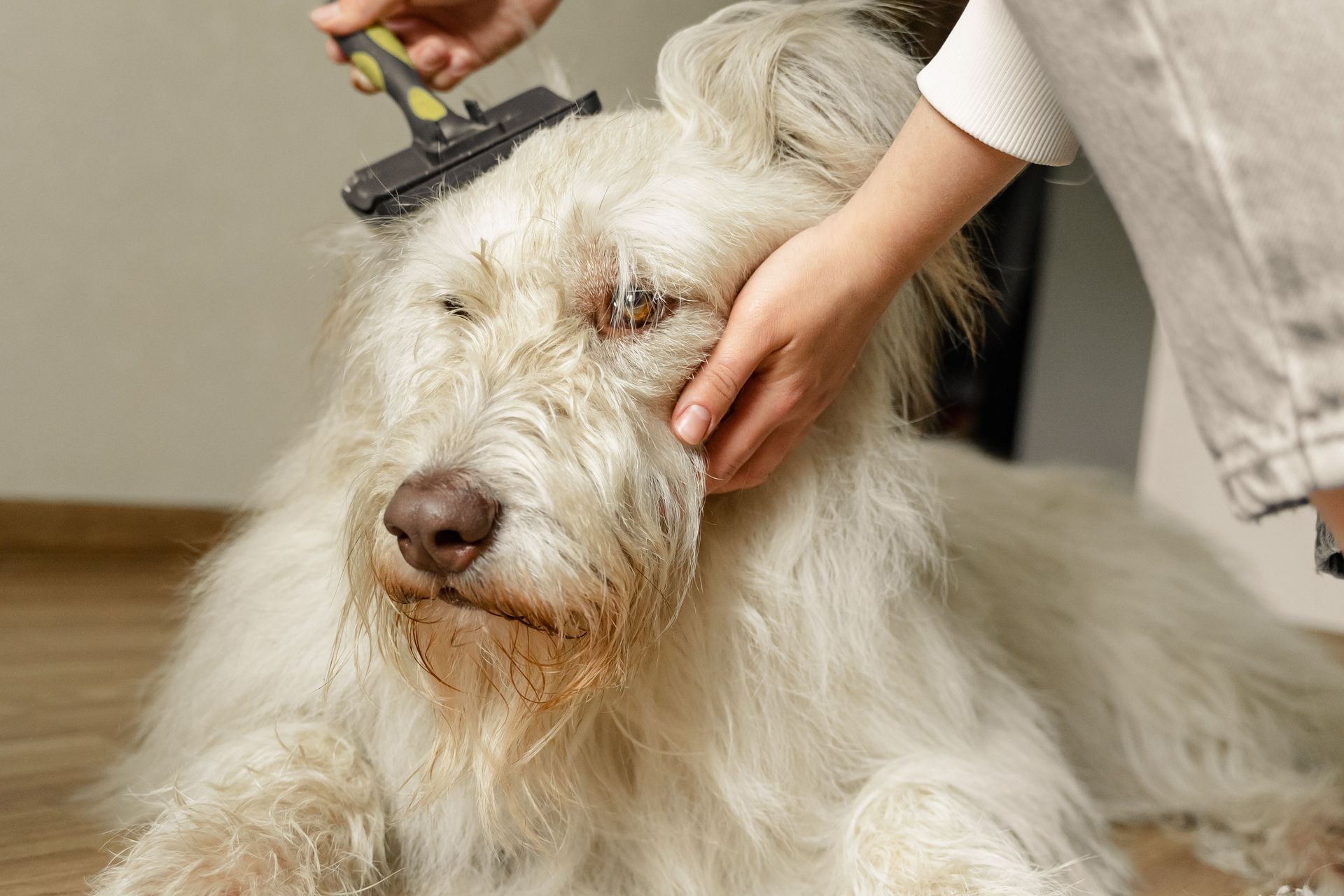
What De Shedding Treatment Actually Removes
Undercoat removal in a professional de shedding session addresses the loose secondary coat that the dog is actively releasing, not the healthy guard hairs that form the outer coat's protective layer. A common concern from owners is that de-shedding will thin the coat permanently or damage it; this does not happen when the process is done correctly, because the tools target loose fur that has already detached from the follicle rather than pulling healthy, attached hair. What leaves the dog on the grooming table is fur that would have ended up on the couch anyway, just concentrated into one appointment rather than distributed across six weeks of daily fallout.
After a de-shedding treatment at Drop Tine Kennels, the visible change in shedding at home is measurable, owners of breeds like German Shepherds, Labrador Retrievers, or Huskies typically notice a significant reduction in daily loose fur for several weeks following a thorough treatment. The coat itself also lies differently once the trapped undercoat has been removed: flatter, with better airflow to the skin, which matters for comfort during East Texas summers.
Coat conditioning applied after de shedding treatment strengthens the guard hair layer and reduces static, which is one factor that causes loose fur to cling to furniture and clothing rather than falling freely. Detangling work addresses any mats or knots that formed in the undercoat during the previous weeks, mats that are left in place prevent the skin from releasing heat efficiently and create environments where skin irritation develops underneath.
What Owners Ask About De Shedding Services
Owners scheduling their first de-shedding treatment often want to understand what the process involves, how long results last, and whether it's appropriate for their dog's coat type.
How is seasonal de shedding different from regular brushing?
Regular brushing removes surface loose fur; de-shedding treatment uses specific tools and blow dry technique to pull loose fur from deep in the undercoat layer, the volume removed in a single de-shedding session typically far exceeds what weeks of brushing at home produces.
Which breeds benefit most from professional de-shedding?
Double-coated breeds, including Labrador Retrievers, German Shepherds, Golden Retrievers, Siberian Huskies, and similar dogs, benefit most, though any heavy-shedding breed with a dense undercoat is a good candidate.
How long does the reduced shedding effect last after treatment?
Most owners see meaningful reduction in daily shedding for four to eight weeks following a thorough de, shedding appointment, though this varies based on where the dog is in its coat cycle at the time of the treatment.
Why does Lufkin's climate affect how often de-shedding is needed?
The warm temperatures and humidity that persist for much of the year in East Texas mean that double, coated dogs often shed more continuously rather than in two distinct seasonal blows, this can make year-round de-shedding maintenance more practical than treating it as a once or twice annually event.
What coat conditioning does after a de-shedding treatment?
Conditioning restores moisture to the guard coat layer that may be stripped slightly during the de shedding process, reduces breakage, and helps the coat resist tangling in the weeks that follow.
Drop Tine Kennels can assess your dog's current coat condition and undercoat density to determine the right de-shedding interval and confirm which coat care treatments apply to your dog's specific coat type.